
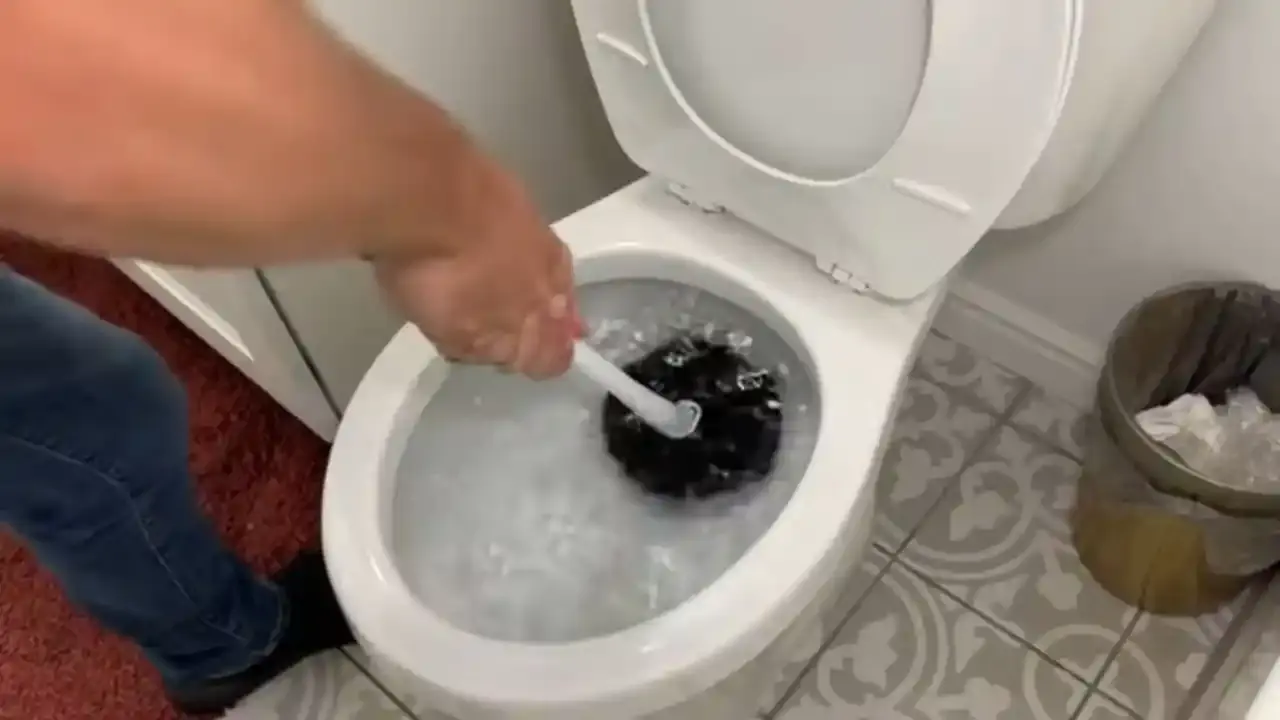
Most toilet clogs clear with a plunger. A few do not, and those are the ones that deserve a closer look. When a toilet stays blocked after good plunging, or drains slowly and clogs again within days, the problem is often deeper in the pipe than the trap.
This guide helps you work out what kind of clog you have, what is safe to try and when to stop. It also covers the signs that the problem is in the main sewer line, which affects every fixture in the house and needs a different response.
Stop and check before you flush again
If the toilet bowl is full and rising, do not flush again. Remove the tank lid and lift the flapper to stop more water from entering the bowl. If the water is rising anyway, close the supply valve on the wall behind the toilet by turning it clockwise.
Then ask one question. Is it only this toilet, or are other drains affected. Run a tap in the nearest sink and watch whether the toilet gurgles. Check the tub and the floor drain. The answer separates a local clog from a main line problem.
Local clog or main line
| What you see | Probably | What to do |
|---|---|---|
| Only this toilet is blocked, other drains run fine | A clog in the toilet trap or its branch | Plunge, then use a closet auger |
| Several fixtures drain slowly or gurgle | A partial blockage in the main line | Stop using water and call |
| The tub or a floor drain fills when you flush | A main line blockage | Stop using water and call |
| Sewage smell and standing water | Backup in the main line | Stop using water and call |
| Toilet clogs again within days of clearing | Damage, roots or a belly in the line | Camera inspection |
A main line clog affects the lowest fixtures first. If water is coming up in a tub or a floor drain on the ground floor when you flush upstairs, the blockage is downstream of every branch. That calls for a cable or a jetter through the cleanout, not a plunger.
What is safe to try
- Use a flange plunger, which has a rubber extension that seals in the toilet outlet, and push and pull steadily with the bowl partly filled.
- If the clog does not clear, use a closet auger, a short cable made for toilets with a protective sleeve.
- Feed the auger gently and crank it. Do not force it, since the porcelain can scratch or crack.
- Flush a small amount of water to test, and stop if the bowl rises.
- If it clears, run water for a minute and watch other fixtures.
Skip chemical drain openers in a toilet. They rarely clear a deep clog, they sit in the bowl and they can splash back on whoever works on it next. They can also damage the pipe and make a later repair more hazardous. A plunger and an auger are the safe tools.
What commonly causes a deep clog
- Too much toilet paper, or products that are not meant to be flushed.
- Wipes, even those labeled flushable.
- A toy or other object that passed the trap and lodged in the line.
- Roots entering a joint in the sewer lateral.
- A belly, a sag in the pipe where waste settles.
- A cracked or offset pipe that catches paper.
If the clog returns every few weeks, the cause is probably in the line and not in the toilet. A sewer camera inspection shows what is catching waste, and hydro jetting can clean a line that has built up. A pipe that has cracked or collapsed is a sewer line repair job.
When to stop and call
Call if the plunger and the auger do not work, if more than one fixture is affected, if sewage is coming up anywhere or if the toilet clogs again soon after clearing. Stop using water in the house while you wait. Every flush and every shower adds to the problem if the main line is blocked.
Our drain cleaning page and the toilet repair and installation page explain how we clear and repair toilets and their lines. The emergency line is open 24/7 for backups.
Prevention that actually works
Most deep clogs are preventable. Flush only toilet paper and human waste, and keep a small covered bin in the bathroom for everything else. Wipes, even those labeled flushable, do not break down the way paper does, and they collect in bends and on roots where they build a plug that can take hours to clear.
Look at the habits of the household too. Children and guests flush things adults would not, and a short note in the bathroom helps. If your home has a low-flow toilet, use fewer sheets per flush or flush twice for large loads, since a weak flush can leave waste moving slowly through a long run.
If the house has had clogs in more than one fixture, consider a camera inspection even if the last clog cleared. A line that has partly failed will clog again, and the cost of finding out is far less than the cost of a backup on a weekend. Our team can also tell you whether regular cleaning would help.
Standards behind the line
Toilet drains and the lines they join are held to the California Plumbing Code, which is built on the Uniform Plumbing Code (UPC). A repair that changes the pipe may need a permit, so ask the City Building Division at 707-588-2226.
Wet ground and sewer lines nearby
The Laguna de Santa Rosa borders the Cotati side of Rohnert Park, and Cotati sits within the Laguna drainage basin, which has a history of seasonal flooding. Wet soil in the rainy season can move pipe joints and let roots in, so a toilet that clogs deep in winter may be telling you about the lateral.
See our Cotati page and Petaluma page, where the Petaluma River floodplain overflows every few years, for more on wet-season drain trouble.
Sources: City of Rohnert Park, City of Cotati, City of Petaluma.
Questions readers ask
Why does my toilet keep clogging?
If it clogs again soon after clearing, the cause is probably in the line, such as roots, a belly or a damaged pipe. A camera inspection shows what is happening.
Is it safe to use drain cleaner in a toilet?
We do not recommend it. Chemical openers rarely clear a deep clog, and they can damage the pipe and make later repairs hazardous.
When is a clogged toilet an emergency?
When water is rising and will not stop, when sewage is backing up or when several fixtures are affected. Stop using water and call the 24/7 line.
Do you serve Cotati for sewer backups?
Yes. Cotati is within our service area, and the emergency line is open 24/7.