
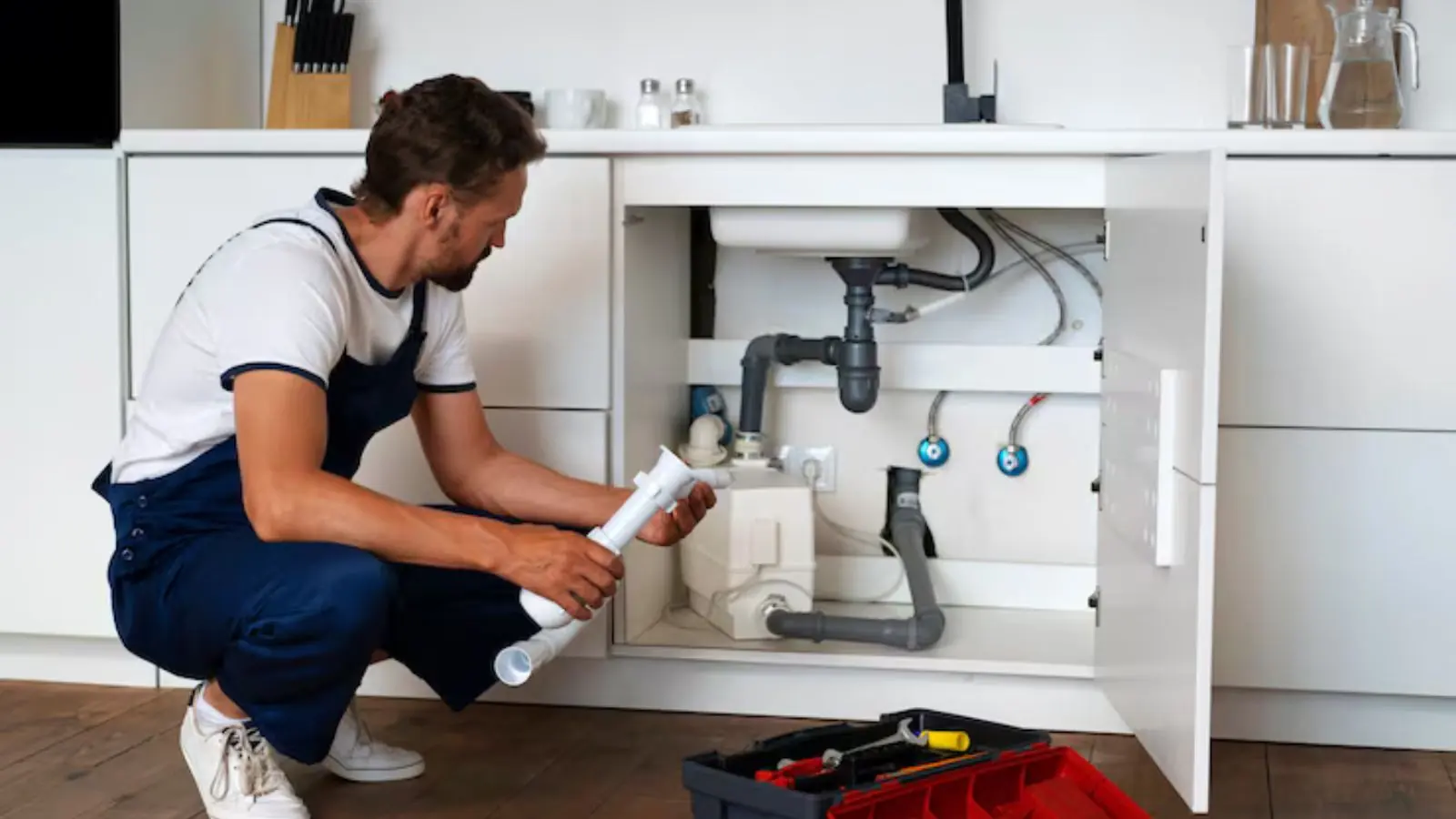
Plumbing installation is planned work: a new sink, a bathroom remodel, a kitchen relocation, a laundry hookup or a new build. It does not carry the urgency of a burst pipe, though we offer same-day visits when the schedule allows. If something has already failed, start with a repair page such as faucet and sink repair.
A good installation starts with the plan. The location of drains and vents often sets what is possible in a remodel, and a plumber who looks before quoting avoids expensive changes later.
Fixtures: sinks, toilets, showers and tubs
Installing a fixture means more than connecting it. The supply valves, drain size, trap, venting and clearances all matter. We replace old supply lines and stops when we install a fixture, since they are the parts that fail next. For a toilet swap, see toilet repair and installation. For a new kitchen sink, a disposal and dishwasher connections are usually part of the work.
- Kitchen sinks, faucets, disposals and dishwasher connections.
- Bathroom sinks, toilets, showers and tubs.
- Laundry hookups, utility sinks and washer boxes.
- Outdoor hose bibs and exterior spigots.
- Water heater connections, covered on the water heater installation page.
Remodel plumbing and moving fixtures
Moving a sink or a toilet means moving its drain, and drains need slope and a vent. A kitchen island sink, for example, needs a vent route that does not always exist. We look at the floor framing, the nearest vent and the drain line before we promise a layout, and we tell you if a move is expensive.
| Factor | Effect |
|---|---|
| Distance to the drain line | Farther moves need more pipe and more slope |
| Venting | A fixture needs an air path, and an island sink is the hardest case |
| Floor type | A slab means cutting concrete, while a raised floor is easier to open |
| Existing pipe condition | Corroded pipe may be better replaced than extended. See repiping |
New construction and additions
New builds and additions need rough-in plumbing, which is the drain, vent and supply lines set before walls close, and then trim, which is the fixtures set after finishes. We coordinate both stages with the builder and the inspector. Inspections follow the schedule of the City of Rohnert Park Building Division, and permit questions go to 707-588-2226.
The California Plumbing Code is built on the Uniform Plumbing Code, and the NEC covers electrical connections for equipment. Rough-in is the stage where an error is cheapest to correct, so we check measurements twice.
Sump and ejector pumps, and gas lines
A basement or low bathroom may need an ejector pump to lift waste to the sewer, and a yard low spot may need a sump pump. Both are installed and replaced as part of planned work, and a failed pump in a storm is an emergency that we take as a call.
Gas piping, whether for a range, a heater or a fireplace, is safety-first work. If you ever smell gas, leave the building and call the gas utility or 911 before calling us.
What affects the price
Questions we hear most
Do I need a permit to install a fixture in Rohnert Park?
Permit rules vary by job, so ask the City Building Division at 707-588-2226. The City states that only a licensed California contractor or the legal property owner may be issued a building permit.
Can you install fixtures I bought online?
Yes. Tell the plumber the model and the rough-in measurements ahead of time so we can confirm it fits. We replace the supply lines and stops at the same time if they are old.
Can you move my kitchen sink to an island?
It depends on the drain, the venting and the floor. We look at the framing and the existing lines before promising a layout, and tell you if the move is practical.
Do you do new construction plumbing?
Yes. We handle rough-in and trim for new builds and additions, and coordinate with the inspector.