
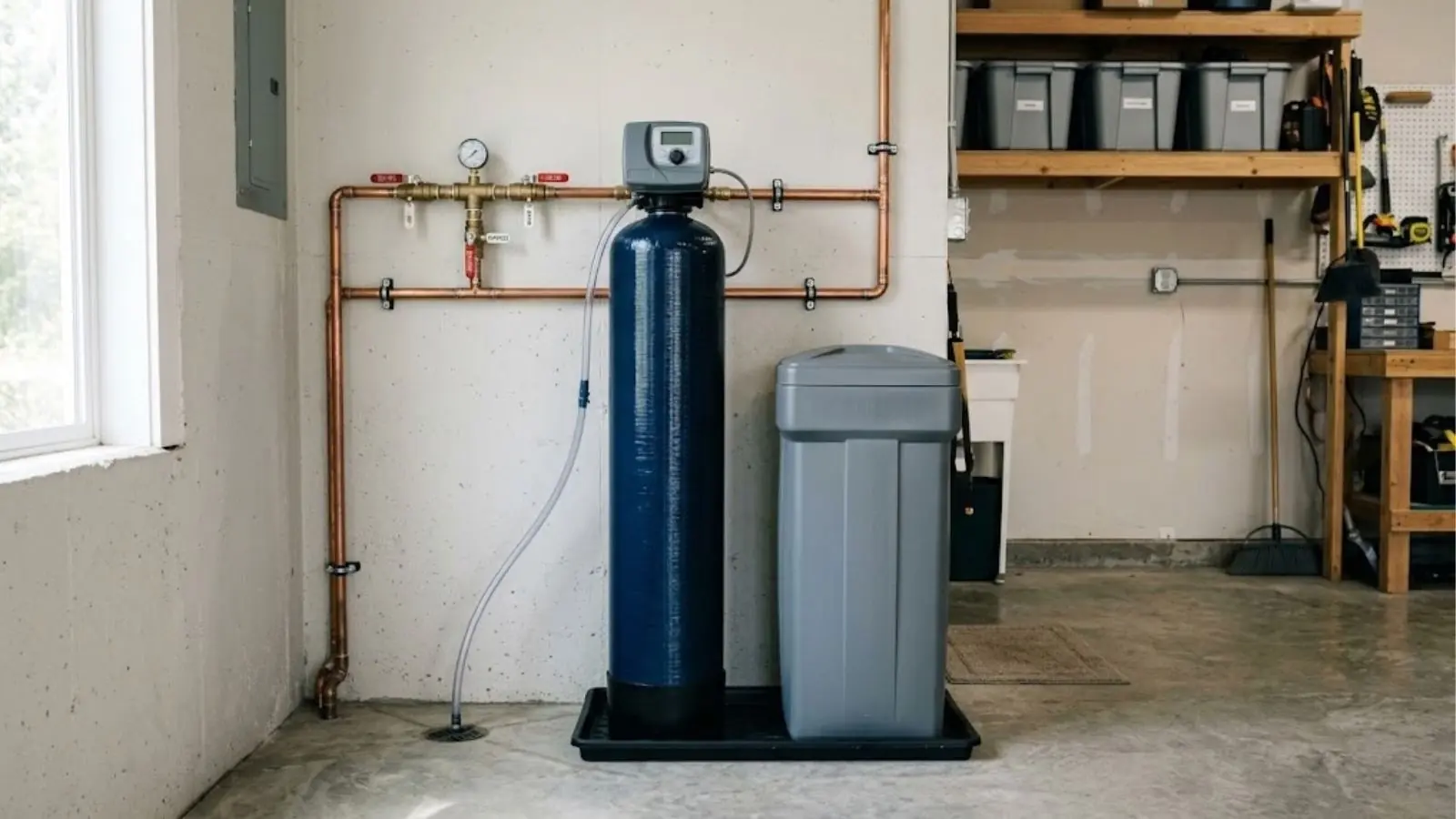
Water softeners and filters are planned purchases, not emergencies, and the most common mistake is buying one before knowing what is in the water. Softeners remove hardness minerals. Filters remove sediment, chlorine taste or specific contaminants. They are not interchangeable, and a good plumber asks what problem you are trying to solve.
We install new softeners and filters, repair existing ones and replace tired ones. We also tell you when you do not need one, which is a real possibility.
Start by learning what is in your water
Rohnert Park draws about 70 percent of its water from Sonoma Water, which mostly comes from the Russian River, and about 30 percent from local groundwater wells. Two sources can mean different mineral content, so which one reaches your street matters. The City publishes an annual Consumer Confidence Report, and it states that the supply meets state and federal standards. We do not quote hardness figures from memory because the report and your own test are the only reliable sources.
- Ask City Public Works at 707-588-3300 for the latest annual water quality report.
- Buy an inexpensive hardness test kit or send a sample to a state-certified lab for a real number.
- Check the signs at home: spots on glass, scale on faucets, soap that will not lather, dry skin after a shower.
- Bring the results to the plumber before choosing equipment.
What hardness does to plumbing
Hard water leaves scale. Scale builds up in water heaters, clogs aerators and shortens the life of tankless heat exchangers and appliances. If your tests show hard water, a softener protects the heater and fixtures, which is the real financial argument for one. If your water is not hard, a softener adds salt and maintenance for little benefit.
Softener or filter: what each one does
| Problem | Likely answer | Note |
|---|---|---|
| Scale on fixtures, spotted glass | Water softener | Confirm hardness with a test first |
| Chlorine taste or smell | Carbon filter | Treats taste, not hardness |
| Sediment or cloudy water | Sediment filter | Ask whether the City is flushing lines nearby |
| Drinking water concerns | Point-of-use filter or reverse osmosis | Match to a specific result |
Repair and replacement of existing systems
Softeners fail in familiar ways. A control valve stops cycling, the resin bed wears out, the brine tank clogs with salt bridging or the system leaks at a fitting. We repair valves and fittings, and when a unit is old and costly to keep running, we say so. Ask about local rules on softener brine discharge by calling the City, because we do not state rules from memory.
If you are buying a new water heater, this is a good moment to think about water quality too, and water heater installation pairs naturally with treatment equipment. A hard water problem that has already damaged a heater may be one reason to start with replacement.
What affects the price
Questions we hear most
Do I need a water softener in Rohnert Park?
It depends on your tap, not on the town. Ask the City for its latest water quality report and test your own water. If the result shows hard water and you have scale problems, a softener may help.
Where can I find the City water quality report?
The City of Rohnert Park publishes a Consumer Confidence Report each year as state and federal law requires. Call Public Works at 707-588-3300 or check the City website for the current one.
Can you repair a softener you did not install?
Usually yes. We service common valve and fitting problems on most systems, and we tell you if the unit is more costly to keep than to replace.
Is this an emergency service?
Not usually. Softeners and filters are planned work. A leaking softener or a valve that will not shut is the exception, and we answer that call 24/7.