
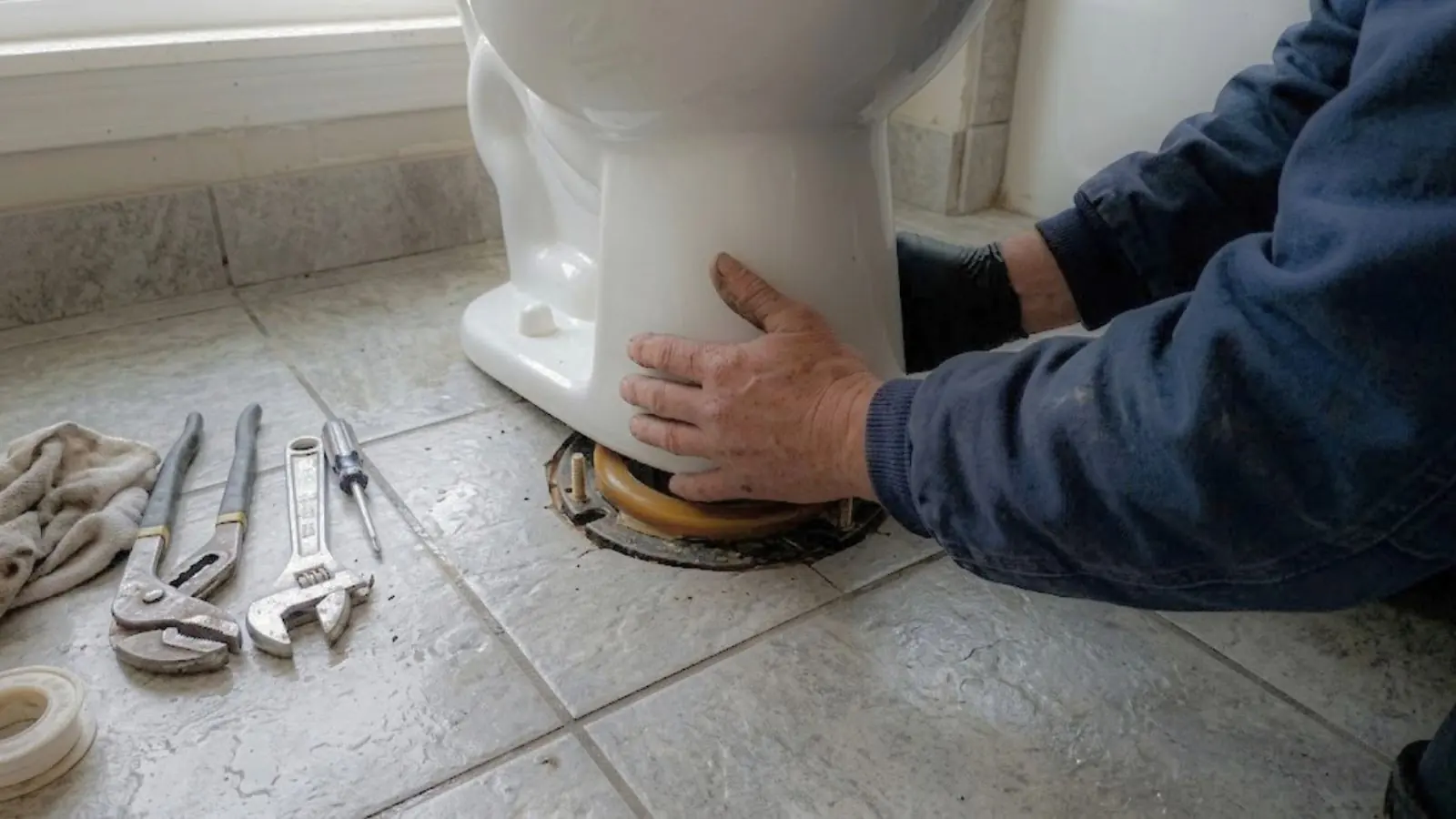
A toilet rough in is the plumbing that is in place before the toilet itself is set. It includes the drain opening in the floor, the flange that the toilet bolts to, the vent that lets the drain breathe and the cold water supply stub. Getting it right matters because the toilet you buy has to fit it, and moving it later means opening floors.
Homeowners meet this term in two situations. One is a remodel where a toilet is being replaced and the new model must fit the old connections. The other is a new bathroom or a moved toilet, where the rough in is built from scratch. This guide covers both, in plain terms.
The measurement that decides which toilet fits
The rough in distance is measured from the finished wall behind the toilet to the center of the drain opening, which is usually the center of the flange bolts. A common distance is twelve inches, and ten and fourteen inch versions exist. A toilet made for twelve inches will not sit right on a ten inch rough in, so measure before you shop.
Measure to the finished wall, not to the bare framing or the baseboard. If the wall has not been tiled yet, add the thickness of what will be there. A tape measure and a note on the box before you buy save a trip back to the store.
The parts of a toilet rough in
| Part | What it does | What to check |
|---|---|---|
| Closet flange | Connects the toilet to the drain and holds the bolts | Sits at the right height on the finished floor and is not cracked or loose |
| Drain and trap arm | Carries waste to the main line | Is sloped and sized as required for your jurisdiction |
| Vent | Lets air in so the drain flows and the trap stays sealed | Connects correctly and is not blocked |
| Supply stub and shutoff | Brings cold water to the tank | Is at the right position, with a working shutoff valve |
The flange should sit on top of the finished floor, not below it. If a new tile or vinyl floor has been laid over the old floor, the flange may now be low, and the toilet can rock or leak at the seal. A spacer kit or a flange extension can fix a small difference, but a flange that is cracked or rusted needs replacing.
Replacing a toilet versus moving one
Swapping a toilet for another one on the same drain is a modest job. The old toilet comes up, the flange is inspected, a new wax or wax-free seal goes down and the new toilet is set and bolted. The work depends on the rough in being sound, so the flange and the floor around it are worth checking whenever the toilet is lifted.
Moving a toilet is a different job. The drain has to be rerouted, the new run has to slope properly, the vent has to be reconnected and the floor often has to be opened. Those changes are regulated, and the permit and inspection rules depend on the scope. Ask the City of Rohnert Park Building Division at 707-588-2226 before you start, and use a plumber whose license you have checked at cslb.ca.gov.
Signs the rough in has a problem
- The toilet rocks even after the bolts are tight.
- Water seeps at the base after a flush, which usually points to a failed seal or a low flange.
- The bowl gurgles or the trap loses its water, which can point to a venting issue.
- A persistent sewer smell in the bathroom, which can mean a dry or leaking seal.
- The floor around the base is soft or stained.
A soft floor around a toilet base is a reason to stop and look. A slow leak at the seal can rot the subfloor over time, and the repair then includes the floor as well as the toilet. If you see these signs, our toilet repair and installation page explains how we check a toilet and its connections.
Before you buy a toilet
- Measure the rough in from the finished wall to the center of the flange bolts.
- Check the space for the tank width, the seat swing and the distance to the side walls.
- Confirm the water supply stub and the shutoff valve are in good shape.
- Decide whether you need an elongated or round bowl, and whether the height suits the people who will use it.
- Inspect the flange and the floor once the old toilet is up, before the new one goes down.
If the old toilet has been leaking, expect surprises under it. The floor may need drying or repair before the new toilet is set. A plumber who finds that mid-job should show you the damage and explain the options before going on.
Vents, slopes and why they matter
A toilet drain is only half the story. The vent that serves it lets air into the line behind the flushing water. Without it, the drain can siphon the trap dry or gurgle, and sewer gas can enter the room. A rough in that looks right from the floor can still have a venting problem inside the wall, and that is one reason moved toilets are not a casual job.
Slope matters as well. Waste needs to travel at a steady, modest slope, not too flat and not too steep, and the code your jurisdiction uses sets the range.
The California Plumbing Code is built on the Uniform Plumbing Code, and a plumber working to it knows the sizing and slope rules without looking them up. If you are building a new bathroom, ask the plumber to explain how the new drain will tie into the existing line and what the plan is for the vent.
Take photographs of the rough in before the walls close. They show where the drain, vent and supply sit, and they are valuable years later if a repair or a remodel is needed.
Remodels in a planned city
Rohnert Park was laid out in 1956 and 1957, and many homes from the first decades have had bathroom remodels since. When an older bathroom gets new flooring, the flange height is the detail that most often needs attention.
Nearby towns have even older housing. Sebastopol, for example, is known for Craftsman-era homes, and a toilet swap there can turn up original drain and floor conditions. See our Sebastopol page or Santa Rosa page if you are outside Rohnert Park.
Sources: City of Rohnert Park, City of Sebastopol.
Questions readers ask
What is the standard toilet rough in?
Twelve inches is the most common distance from the finished wall to the center of the drain, but ten and fourteen inch versions exist. Measure yours before buying.
Can I move a toilet to another spot in the bathroom?
Often yes, but it means rerouting the drain and vent and usually opening the floor. Ask the City of Rohnert Park Building Division at 707-588-2226 about permits first.
Why does my new toilet rock?
The usual causes are an uneven floor, a flange that sits too low or a seal that was not compressed evenly. The flange height is the first thing to check.
Do you install toilets in Rohnert Park?
Yes. We install and repair toilets, and the emergency line is open 24/7 for leaks and overflows.