
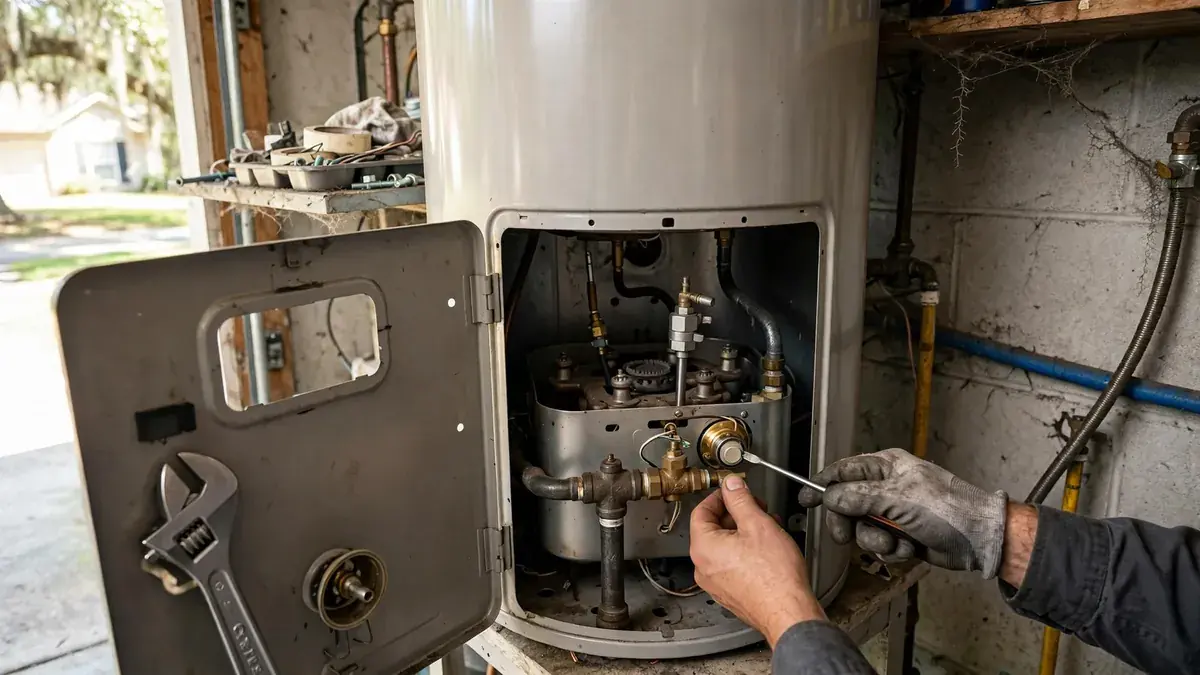
The small door at the bottom of a gas water heater, often called the burner access door, is easy to overlook. It covers the burner compartment where the flame and the pilot live. When it is missing, bent or poorly fitted, the heater may run poorly, soot up or become a safety problem. Replacing it is cheap compared with the problems it can cause.
This guide explains what the door does, how to tell when it needs replacing and what to do about it. Because gas appliances are involved, the first rule is about safety, and we start there.
If you smell gas, leave first
A gas smell near a water heater is not a door problem. Leave the building, do not use light switches or phones inside, and call the gas utility or 911 from outside. Call us after the situation is safe. Everything below applies to a heater that is not giving off a gas smell.
What the access door does
The door closes off the combustion chamber from the room. The flame needs a controlled supply of air to burn cleanly, and the door, along with the base of the heater, helps direct that air. It also keeps lint, dust and stray objects out of the burner area, and keeps people and pets from touching a hot flame.
Many heaters also use the sealed chamber as part of a safety feature that prevents flammable vapors from igniting. A missing door can defeat that protection. This is part of why a heater with a missing or damaged door should not be left running.
Signs the door needs attention
- The door is missing or has fallen off.
- It is bent, rusted through or does not close flush.
- There is soot or black marks around the base of the heater.
- The flame looks yellow or lazy instead of steady and blue.
- The pilot keeps going out, especially in a draft.
- A heater that has been moved or serviced and the door was never put back.
Soot on the heater or the wall is a warning. Incomplete combustion produces carbon monoxide, which cannot be seen or smelled. A working carbon monoxide alarm near sleeping areas is a basic safeguard for any home with gas appliances, and soot or a yellow flame is a reason to call a plumber promptly.
Can I buy a door and put it on myself
Doors are model specific. The right one comes from the heater's manufacturer or a parts supplier, using the model and serial number on the data label. A generic piece of sheet metal is not a replacement. The door has to fit the opening, seal around the edges and carry any labels or vents the design needs.
Fitting the door is simple, but inspecting what is behind it is not. Before closing it, a plumber looks at the burner, the pilot and the thermocouple, checks for rust flakes and debris and confirms the flame is steady. If you notice rust on the burner or scale at the bottom of the compartment, the tank itself may be failing, which is a different conversation.
| Situation | Usual direction |
|---|---|
| Door missing, heater otherwise sound | Replace the door and inspect the burner |
| Door bent from impact, no soot | Replace the door and check the flame |
| Heavy rust in the burner chamber | Have the tank evaluated for replacement |
| Soot, yellow flame or recurring pilot problems | Plumber visit before further use |
If the heater is more than a decade old and showing rust or leaks, the door is probably not the main problem. Our water heater repair page covers what we check, and the water heater replacement page explains when a new unit is the better choice.
Where a heater sits matters too
Heaters in garages and closets need clearance, ventilation and protection from stored items. Keep flammable products away from the base, keep the area around the unit clear, and make sure combustion air can reach it. If you are not sure the installation is right, a plumber can look at it on any service visit.
Pilots, thermocouples and why the door is not the whole story
A gas water heater keeps a small pilot flame lit, and a safety device called a thermocouple senses that flame and keeps the gas valve open. If the pilot goes out, the thermocouple cools and the valve closes, which is how the heater protects you. A door that is missing or loose lets drafts reach the pilot, so it keeps blowing out, and that is the symptom people often notice first.
If you relight the pilot and it stays lit only briefly, the thermocouple may be worn, or the gas control valve may be failing. A plumber can test both. Repeated relighting is not a long-term fix, since each failure is the heater telling you something is wrong.
Also look at the vent above the heater. A draft hood or flue that is blocked, rusted or disconnected can push combustion gases back into the room. Check that the flue is connected and sloped upward, and that nothing is stored against it. If anything looks wrong, have it checked before the next cold week, when the heater works hardest.
Finally, think about age. Most tank heaters are built for a lifespan measured in years, not decades, and a heater that is showing several symptoms at once is often telling you its time is near. A missing door on an old heater is a good moment to ask what else is wearing out.
Standards for a gas heater
Gas water heaters are installed and serviced according to the manufacturer's instructions and the California Plumbing Code, which is built on the Uniform Plumbing Code (UPC). Use parts made for your model, not a substitute.
Garages, closets and city rules
Rohnert Park homes from the planned city's first decades often have the water heater in a garage or closet. If you are converting a garage, finishing a closet or boxing in a heater, ask the City Building Division at 707-588-2226 what is allowed before you build around it.
In older nearby towns, installations vary even more. See our Cotati and Santa Rosa pages if your home is outside Rohnert Park.
Source: City of Rohnert Park Building Division.
Questions readers ask
Is it safe to run a water heater with the door off?
We advise against it. The door helps control combustion air and keeps the burner area closed off. Get the right door fitted before you keep using the heater.
Where do I find the right replacement door?
Use the model and serial number on the data label to order from the manufacturer or a parts supplier. A plumber can also supply and fit it.
What does soot on my water heater mean?
It can mean incomplete combustion, which produces carbon monoxide. Call a plumber, and make sure carbon monoxide alarms work.
What if I smell gas?
Leave the building and call the gas utility or 911 from outside. Do not use switches or phones inside.